Alongside Michelin, Gault & Millau is one of the world’s two most influential and best-known culinary guides, founded in France in 1965.
It is not a directory or Google Maps listing every dining venue. The yellow guide features only restaurants able to offer guests something exceptional and push back the boundaries of culinary imagination.
Objective assessments based on established international standards are carried out by independent inspectors. They are people who understand food and can appreciate product quality.
Inclusion in the Gault & Millau guide is reserved for venues where inspectors appreciate not only the taste and appearance of dishes, but also the atmosphere, location, wine and spirits list, and the range of non-alcoholic drinks and cocktails that pair perfectly with the food. The overall impression is assessed, from the moment the inspector crosses the threshold until they leave.
After a break of several years, the famous French yellow guide has returned to search for culinary gems across our country. The latest edition of Gault & Millau Poland 2026 features Blugrass Bistrot restaurant at Radisson Blu, Sopot.
To mark the occasion, we spoke with Michał Gębala, Director of Food and Beverage at Radisson Blu Hotel, Sopot.

Michał Gębala, Director of Food and Beverage, Radisson Blu Hotel, Sopot
What does the distinction awarded by Gault & Millau mean to you?
Michał Gębala: Above all, we are pleased to have been noticed and appreciated. In a sense, it is the culmination of several years of our team’s work.
Does receiving this rating affect the food and beverage team’s daily work?
MG: Of course. Being featured in the guide gives us greater motivation to keep developing and improving our services.
What does a typical working day look like for the food and beverage team at Radisson Blu, Sopot?
MG: We divide our food and beverage team into three areas: breakfast, the à la carte restaurant, and events, conferences and banquets. Work in each department is shaped by its own seasonality, which affects conferences and the à la carte restaurant most. Breakfast is the most stable, as both individual and business guests use this service. Each department is responsible for specific areas, while supporting one another at critical moments.
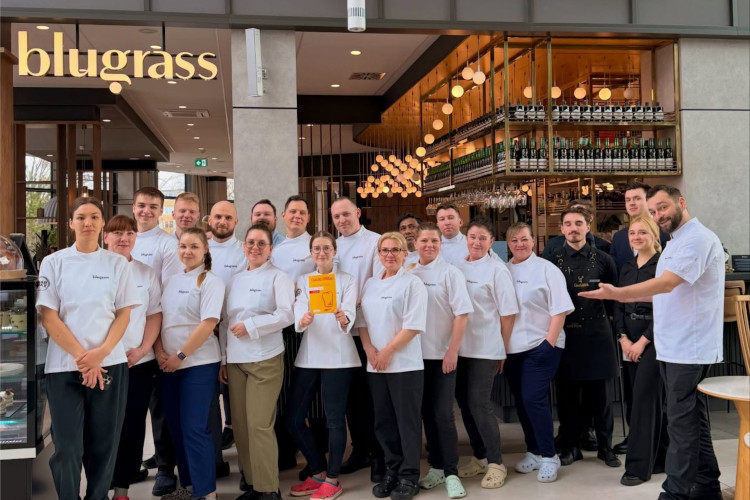
The Blugrass Sopot team with Executive Chef Piotr Kościuk
Blugrass encompasses a wide range of brands: Blugrass Bistrot, Aperitif, Delice and Resto, plus Blugrass Hall. What do these names represent?
MG: Each name refers to a particular space and defines its offering. Bistrot is our à la carte restaurant and the showcase of our entire food and beverage operation. Delice offers pastries and a café area. Aperitif is a cocktail bar serving signature and classic cocktails, plus tapas-style snacks. Resto is where we serve breakfast and buffet dinners and host all kinds of special events.
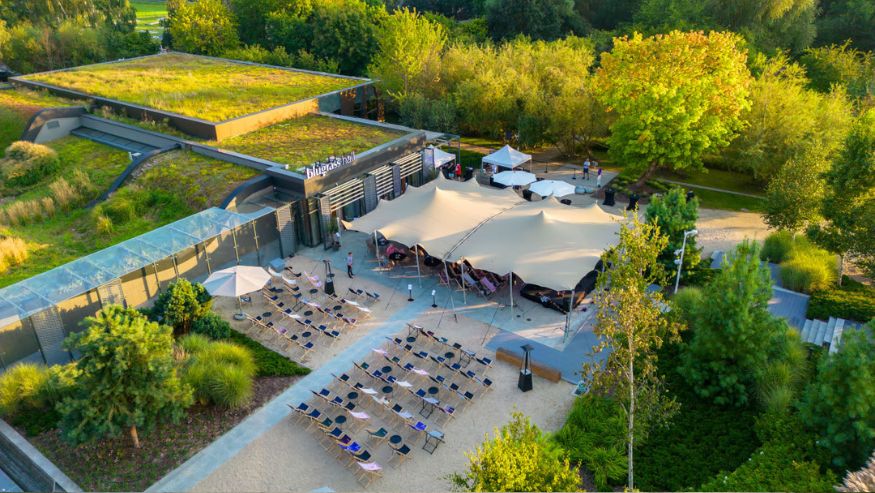
Blugrass Hall is a beautifully located event venue hosting concerts, New Year’s Eve parties and carnival events. In summer, the outdoor area also hosts regular initiatives such as “Maritime Tales”—shanty concerts, wine tastings from our Chateau Isolette winery and many more, to which we will soon be inviting guests.
How do you divide responsibility in the kitchen? What are the main roles?
MG: Responsibility lies with the chefs de partie heading each section. We have a banquet chef, a breakfast chef and an à la carte restaurant chef. Above them is the Executive Chef, who oversees all areas.
What is the biggest challenge today in maintaining consistent quality while serving large numbers of guests?
MG: In a kitchen of our scale, the key is to introduce appropriate standards and then monitor quality continuously. We try to assess our work critically and strive for constant improvement.
What do local products mean to you?
MG: Local products fit perfectly with the comfort food concept that guides us in creating our offering. That is why you will find products such as honey from Żuławy, cheeses from Masuria and fish from certified farms. A special feature is our own hotel herb and vegetable garden, which supplies fresh herbs and decorative flowers, enhancing the flavour and appearance of our dishes. The most local ingredients therefore grow literally outside the restaurant window. Using such products helps us guarantee the highest quality and freshness and, at least symbolically, reduce our carbon footprint, as locally sourced ingredients do not have to travel far before reaching the chef.
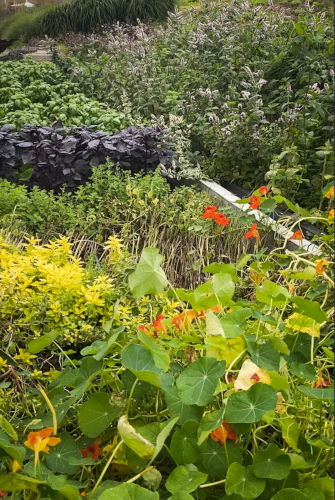
The herb garden at Radisson Blu Hotel, Sopot
Besides local products and familiar flavours, what else does the term comfort food encompass?
MG: Comfort food can be understood as food that lifts your spirits. Achieving this requires a combination of two elements: a tasty meal evoking pleasant associations and memories, and a relaxed atmosphere and joy in spending time at the table. That is the atmosphere we create at Blugrass.
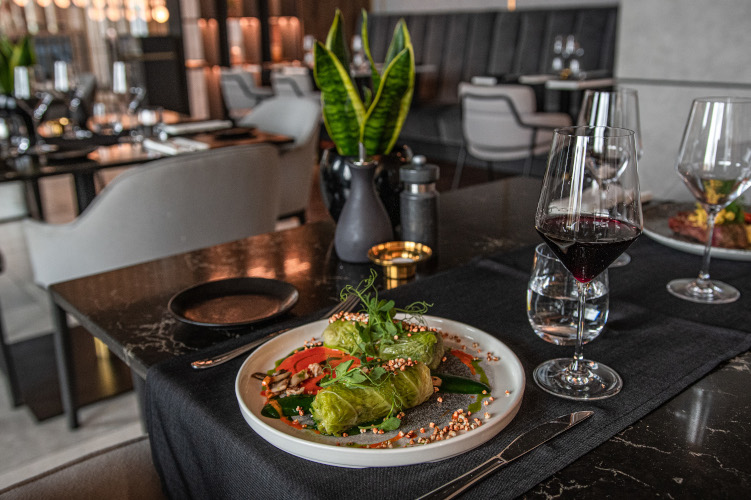
The menu at Blugrass changes seasonally. How do you create it?
MG: We change the main à la carte menu in spring–summer and autumn–winter cycles. We also try to change the seasonal insert once a month, allowing us to keep surprising our regular guests.
The popularity of a particular dish is also important, so some classics remain all year round, such as fish soup, beef tartare and Niçoise salad.
What are your main sources of inspiration when developing new dishes?
MG: Seasonality is the main consideration when developing a menu. Each season has its traditional flavours and evokes particular culinary associations. Since product awareness is fundamental to us, I begin by looking at what nature offers us at a given time. The next step is finding ways to use these ingredients, drawing on various Mediterranean culinary traditions, especially French cuisine, in which Blugrass is most deeply rooted. Knowing different techniques and methods of processing ingredients, even a familiar traditional recipe can be approached with imagination and creativity, using unexpected solutions to create a new signature dish. The final stage is refining the concept through trials, tests and, of course, tastings.
There is no single path to success, and sources of inspiration vary greatly. Various events created by Blugrass also bring a breath of fresh air. For example, for a concert by fado star Fábia Rebordão, we developed a concert menu inspired by Portuguese cuisine.
It is therefore worth visiting Blugrass regularly to discover ever-new and interesting dishes. It is also worth following our events.
Can you give us a glimpse of the events we can expect in the near future?
“MG: Very soon, we will be able to invite guests to our summer zone, which flows seamlessly into the Sopockie Błonia parkland. We are preparing an exceptionally interesting and varied programme for this summer. Each day of the week will offer a different attraction, including shanty concerts, wine tastings, plein-air painting, DJ sets, yoga mornings and a series of coffee-and-pastry gatherings inspired by the Swedish tradition of “Fika”. Details will soon be available at the link.